
Orthopaedic trauma surgeon · Batumi
Hip replacement through the anterior approach
Mikheil Mikeladze, orthopaedic trauma surgeon, focused solely on hip replacement surgery.
12+
years in practice
2000+
operations
3
international fellowships
- Fellowships: USA · 2024 and 2025, Europe · 2026
- International grants: Ronald Burkle Fellowship, EAHM Travelling Fellowship
- Recognition: Med Award 2025
- Research: PhD candidate, New Vision

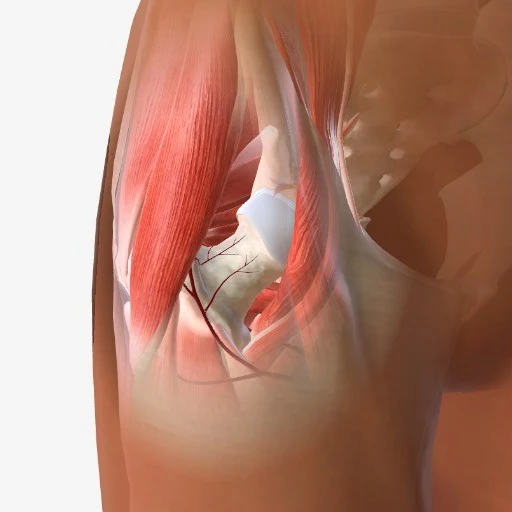
Both incisions are on one image. Press a button to show one of them.
The incision is short and runs across the front, in the natural groin crease. The surgeon works between the muscles and the fibres are not cut.
The classic incision is long and runs down the outer surface of the thigh. The muscles are cut here and then stitched back.
The image is illustrative. The exact place and size of the incision are individual.
Where to start
Is hip pain troubling you?
Most patients come to a surgeon while they are not yet thinking about an operation. Three questions worth starting from.
- 01
What hip arthritis is
How cartilage wears away, why the pain appears in the groin rather than the side, and how the first signs are recognised.
Read more - 02
Treatment options
From weight and exercise through to injection therapy. What conservative treatment achieves and what it cannot.
Read more - 03
When surgery is needed
Which signs suggest the time for a replacement is coming, and why timing matters.
Read more
Position
Surgery is not always necessary
I see surgery as the most extreme form of treatment. My aim is not to perform operations. My aim is to help people, and surgery is one of the tools.
Some patients do not need surgery yet. Conservative treatment, that is weight control and correct loading, physiotherapy and exercises, medication and injection therapy, reduces pain, slows progression and sometimes postpones surgery by years.
At the same time, ignoring the pain is not worth it either. The longer you wait, the more your gait changes, the more other joints suffer and the worse you sleep. Do not wait, but do not rush into surgery either. Seeing a surgeon does not mean surgery.
If you leave the consultation with the conclusion that you do not need an operation yet, that is a successful outcome for me.
Treatment optionsMethod
The anterior approach
The anterior approach means reaching the joint from the front, through the natural space between the muscles. All three approaches, posterior, lateral and anterior, have their strengths. Here is why I choose this one.
Muscles are moved aside, not cut
The surgeon works through the natural space that exists between the muscles. The muscle fibres are neither cut nor stitched, which means less trauma and a shorter rehabilitation.
The incision sits in a natural skin crease
The bikini incision is horizontal and follows the direction of the skin crease. This improves healing, and over time the scar is less noticeable.
On your feet the same day
Most patients start moving within a few hours of surgery. Discharge usually happens within two days at most, and in standard cases without drains or dressing changes.
Technology for maximum safety
I operate in surgical helmet systems, which add a barrier between the team and the open wound, and I use the American STERIS ARCH leg positioner. Both systems were introduced in Georgia for the first time in my practice.
The doctor
Who I am
I work at BAU International Hospital in Batumi. I specialise in total hip replacement through the anterior approach with a bikini incision.
I am a PhD candidate at New Vision University.
Full biographyTraining and recognition
- 2024Fellowship: Edgewood Surgical Hospital, Pennsylvania, USA
- 2025Fellowship: Dr Jonathan Yerasimides, Louisville, Kentucky, USA
- 2025Ronald Burkle Fellowship: international grant of the Anterior Hip Foundation
- 2025Med Award: nomination "Innovator orthopaedic trauma surgeon"
- 2026EAHM Travelling Fellowship: leading orthopaedic centres in Europe
- BAU International Hospital, Batumi
- Anterior Hip Foundation
- European Anterior Hip Meeting
- Edgewood Surgical Hospital, USA · Dr Ryan Molli
- Landmark Surgical Suites, USA · Dr Jonathan Yerasimides
- Schulthess Klinik, Zurich · Professor Michael Leunig
- EOS Clinique du Sport, Paris · Dr Frédéric Laude
- Hôpital Erasme, Brussels · Dr Marc Jayankura
- SWLEOC, London · Dr Richard Field
- Whole Health Orthopedic Institute, USA
- New Vision University
What comes next
Recovery day by day
The most common question at a consultation is "how long until I walk normally". Here is how it usually goes.
Day of surgery
Stage 1 of 7
Getting moving within a few hours of the operation. Most patients stand up with a physiotherapist and take their first steps with a walking frame.
Day 1
Stage 2 of 7
Walking in the room and the corridor, first exercises. Switching from injected painkillers to tablets.
Day 2
Stage 3 of 7
Discharge usually happens by now: once you walk independently, manage stairs and the pain is controlled with tablets.
1 week
Stage 4 of 7
Walking at home and in the yard, gradually increasing the distance. Short stretches are often better than one long walk.
2 weeks
Stage 5 of 7
First follow-up visit: the stitches come out, an X-ray and blood tests. After that, as a rule, patients swap the walking frame for a stick. Some need the frame for three weeks.
6 weeks
Stage 6 of 7
Back to your usual routine. This is normally when driving resumes and desk work starts again.
3 months
Stage 7 of 7
Full return to loading, agreed with your surgeon. Pain is usually gone or minimal.
These timings describe the usual course and are not a promise. Every patient recovers individually, depending on age, other conditions and the starting state.
The surgical patient’s journey (tap here)Preparation · Surgery day · RecoveryRecovery in detailVideo
Educational series
Nine videos, each answering one specific question. The long-form text on the same subject sits on the matching page. Google reads text, and nothing can read the inside of a video.
- Where it all startsHow hip arthritis develops
- A common mix-upThe difference between osteoarthritis and arthritis
- What happens while you waitWhat pain does to the body
- A straight answerCan hip arthritis be cured
- The steps of treatmentWhat treatment changes in hip arthritis
- What the conservative route achievesWhat conservative treatment does to an arthritic joint
- Movement as treatmentExercise and rehabilitation in an arthritic joint
- When pain becomes an indicationWhen joint replacement becomes necessary
- What an implant is made ofTypes of implant
Patient stories
Video feedback and written stories from patients. Every item is published with written, signed consent, without exception.
Follow me
Joints explained, on social media
Short videos, advice and answers to patients’ questions. Choose the network that suits you.
Most videos are in Georgian. The articles on this site are in English.
The decision
Am I a candidate?
If you are not sure whether you need surgery, start with a consultation. We look at the X-ray, work out what stage the joint is at, and decide together what the next step is: conservative treatment, further investigation or surgery.
No online questionnaire can replace a consultation or make a diagnosis.
Contact
Booking and contact
Pick a free day and hour in the calendar, call, or write on WhatsApp.
- Address
BAU International Hospital
143 Bagrationi Street, BatumiOpen in Maps- Consulting hours
- Monday to Friday, 12:00 to 17:00
Send the X-ray image to this number on WhatsApp. File upload on the site is deliberately not offered: a medical image is a special category of personal data.
